Update (August 2026): Our recommendation has evolved again — for most users, we now suggest a cordless power screwdriver over any traditional drill: cheaper, lighter, quieter, and less intimidating. The 6413 below remains our pick if you specifically want a corded drill.
For a long time, the Makita 6408K has been our go-to drill recommendation for powering the VascuVive Wheel. It served us well, but it’s time for a changing of the guard: our new recommended drill is the Makita 6413.
If you already own a 6408K, don’t worry — it’s still a great drill and there’s no reason to replace it. But if you’re shopping for a drill today, here’s why the 6413 is the one to get.
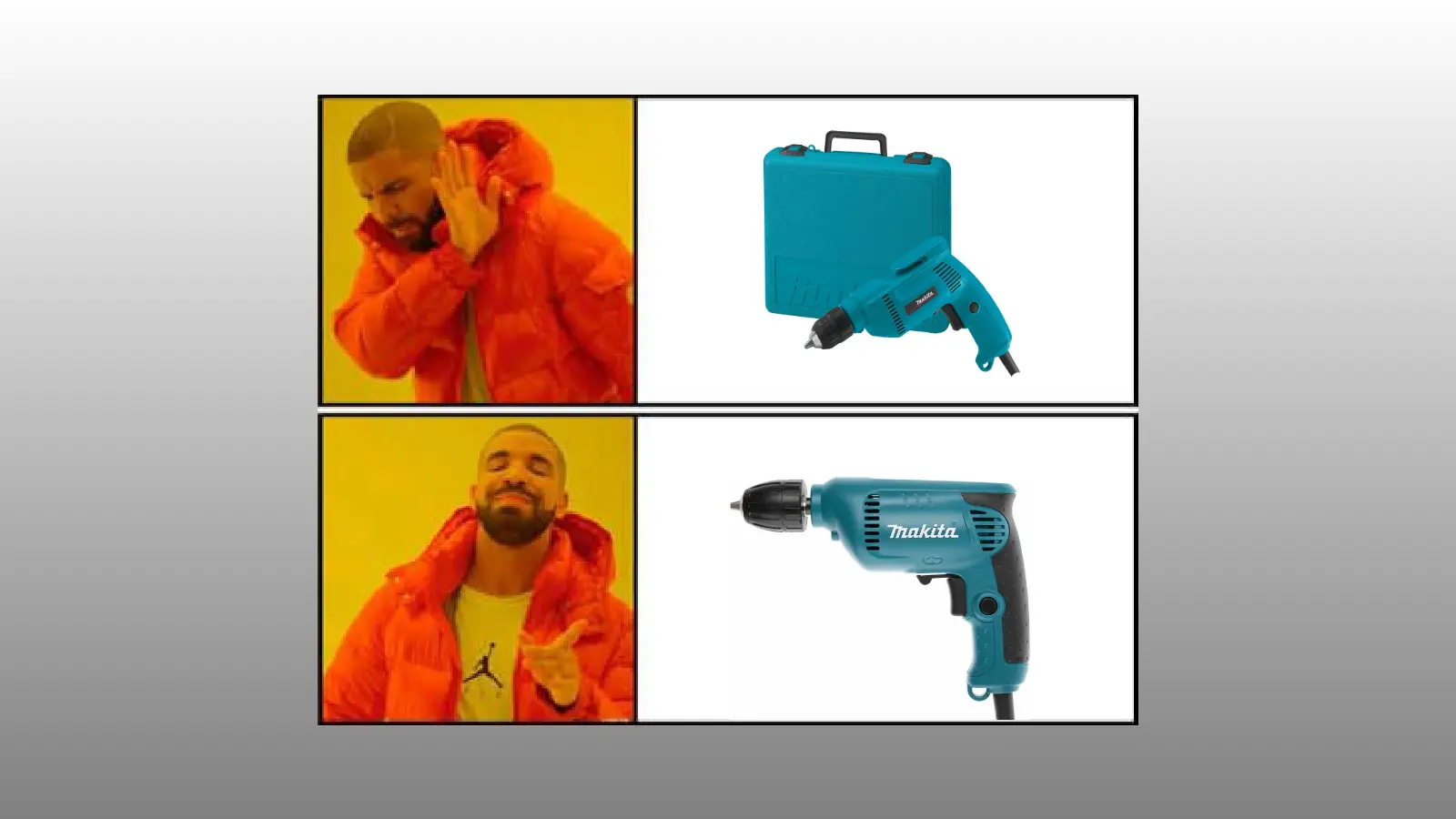
Why We’re Moving On from the 6408K
Two reasons, and they’re both practical:
- It’s getting hard to find. The 6408K has become increasingly difficult to source, and when you do find one, the price keeps creeping up. A drill recommendation isn’t much use if you can’t actually buy the drill.
- Its extra torque is wasted on us. The 6408K has more torque than the 6413, but for spinning the wheel, torque simply isn’t necessary. The wheel is a light, free-spinning load — you’re paying for muscle you’ll never use.
Why the 6413 Wins
It’s available globally, and it’s affordable. The 6413 sells online for $50-60 and can be sourced just about anywhere in the world. No hunting through secondhand listings or paying scalper prices.
It’s more comfortable to hold. The 6413 has a more comfortable grip and is slightly lighter than the 6408K. When you’re holding a drill steady for a 20-30 minute session, ergonomics matter more than spec-sheet numbers.
The trigger is the real star. The 6413 has a highly responsive, featherable variable-speed trigger. This is the feature that matters most for our use case: it makes it much easier to keep the wheel steady and maintain precise control at low speeds without wobbling. Smooth, consistent low-speed control is exactly what good wheel technique calls for.
No electric brake. Like the 6408K, the 6413 is a corded drill without an electric brake, so the wheel spins down gradually instead of being slammed to a stop. If you’re not sure why that matters, read our drill recommendations post — it’s the number one thing to check on any drill you use with the wheel.
What About Noise?
This is the one area where the 6408K was special. It used a dedicated gear train and housing design to keep sound below 80 dB(A). The 6413 doesn’t have that acoustic engineering, and at full speed it can creep up to around 85-88 dB(A).
Here’s the thing though: that rating is at full speed, and you should never be anywhere near full speed with the wheel. At the slow crawl we actually use — low RPM, nearly zero load — neither drill comes close to its maximum decibel rating. What you’ll hear from the 6413 is a faint electric hum and a little gear whirring, not a roar.
The Bottom Line
| Makita 6408K | Makita 6413 | |
|---|---|---|
| Availability | Increasingly scarce | Available globally |
| Price | Rising | $50-60 online |
| Grip & weight | Heavier | Lighter, more comfortable grip |
| Trigger | Standard | Featherable, highly responsive |
| Noise (full speed) | Under 80 dB(A) | 85-88 dB(A) |
| Noise (our speeds) | Quiet hum | Quiet hum |
| Electric brake | None ✓ | None ✓ |
For the way the VascuVive Wheel is actually used, the 6413 is cheaper, easier to find, more comfortable, and gives you better low-speed control. That’s a win on every axis that matters.
One More Thing…
I’ll leave you with a teaser: I have a new device in the works that will be USB-C rechargeable — and will eliminate the need for a drill entirely. No cord, no trigger, no drill at all.
Update: the teaser is out — meet the VascuVive Pulse.
