I’ll add more to this post later, but I want to share some quick tips and disclaimers about drill use.
Electric Brake Warning
Modern cordless drills typically have an “Electric Brake” installed. This means that when you pull your finger off the trigger, the drill stops spinning immediately.
Corded drills, however, typically do not have an electric brake. This means that when you pull your finger off the trigger, the drill spins down gradually over the course of 5-10 seconds.
Why You Should Avoid Electric Brakes
If at all possible, please do not use drills with an electric brake. It can be bad for the drill and bad for the wheel. You have tons of momentum and centrifugal force created from the spinning wheel. The second that the drill stops spinning, the braking system in the drill takes a huge amount of force to stop the wheel from spinning. AND, once it does stop it, it transmits a ton of undue stress onto the wheel.
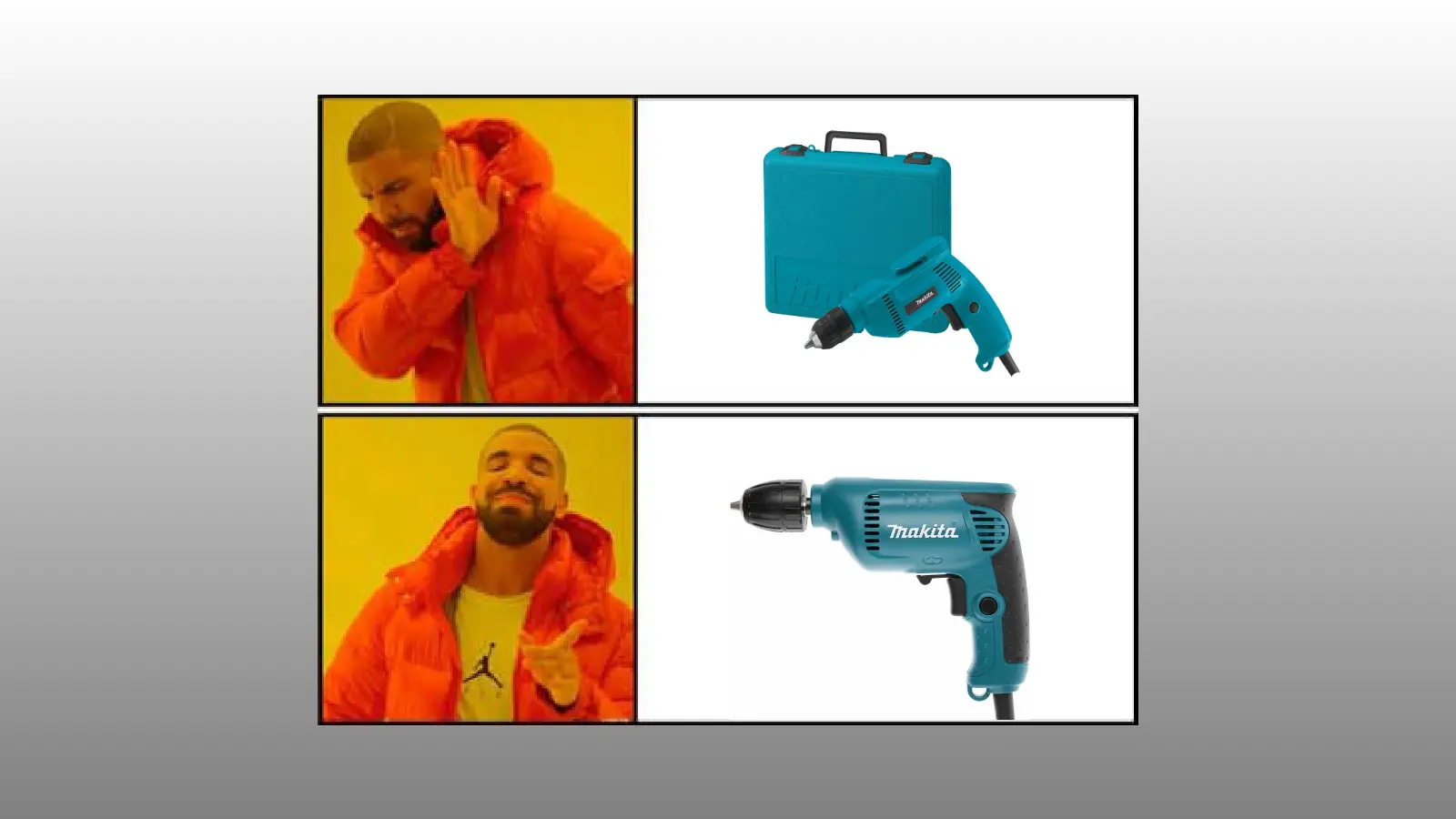
Here’s a side-by-side comparison showing the difference between a drill with an electric brake and one without:
Our Recommendation
Update (August 2026): Our thinking has evolved — we now recommend a cordless power screwdriver over a traditional drill for most users: cheaper, lighter, quieter, and far less intimidating. Read why here. The electric brake warning on this page still applies to any tool you choose.
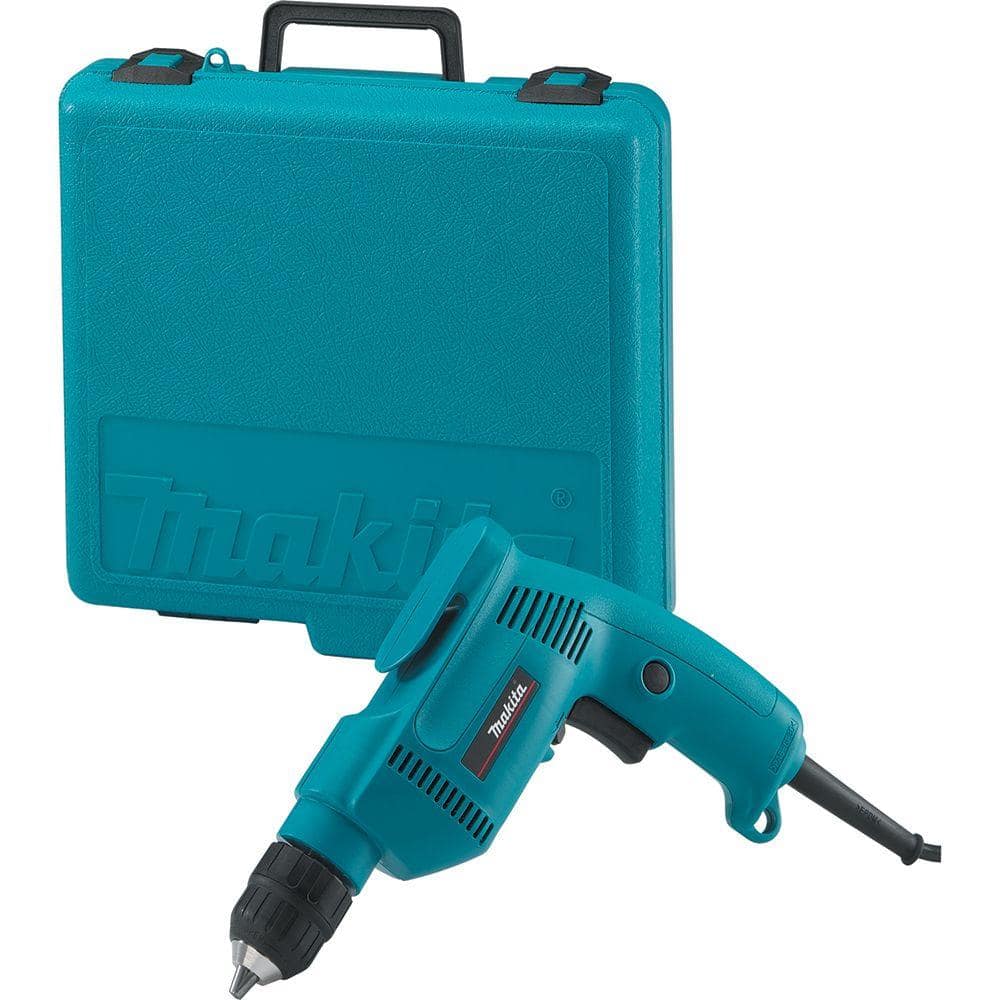
Previous update: If you prefer a traditional corded drill, the Makita 6413 is our drill pick — globally available, affordable, and with a featherable variable-speed trigger that’s perfect for low-speed control. Read the full write-up here.
Our previous pick, the Makita 6408K 3/8 in. drill, is still a great choice if you already own one — it’s low speed and quiet, and doesn’t have an electronic brake. It has just become harder to find and more expensive.